What AI Can’t Do
April 10, 2026
Doug Leyendecker

Welcome to This Week’s Leyendecker View
Let everything happen to you: beauty and terror. Just keep going. No feeling is final.
–Rainer Maria Rilke
FAVORITE READS OF THE WEEK
The world is reorganizing for instability
Change is the only constant.
AI is a great collaborator, not a creator
So says MIT.
FAVORITE LISTEN OF THE WEEK
How Ben Sasse is living, now that he’s dying
The former senator reflects on politics, faith, family, and a life cut short.
THINKING OUT LOUD
What AI Can’t Do
It cannot replace true human connection
Artificial intelligence has advanced with astonishing speed. In virtually no time, it has evolved into systems that can write, code, analyze, suggest, diagnose, and converse with remarkable fluency. With good reason, many feel like AI poses an existential threat to all manner of jobs, particularly white-collar jobs. AI will surely destroy entire task categories and likely entire jobs. But to believe it can evolve into a force that can replace most jobs is to fail to see the gaping hole in its capacities: AI does not and cannot possess emotional intelligence.
Lost in the conversation about doomsday AI narratives is how many jobs require emotional intelligence. AI is a system of statistical inference. It predicts and generates query responses based on patterns in data. It does not have consciousness, intention, experience, or drive. It does not feel. Emotional intelligence—the human ability to identify, perceive, interpret, and respond to emotions in ourselves and others—emerges from precisely those qualities AI lacks. This distinction shapes what AI cannot do and reveals which job roles and types of work will endure.
AI cannot fully grasp context in the human sense. Context is everything surrounding a situation or conversation. It can be macro (cultural, historical) and micro (relational, setting, unspoken thoughts). Humans use emotional intelligence to understand and interpret context.
AI cannot exercise genuine judgment. Real-world decisions are rarely reducible to just data. They involve unique circumstances, differing personalities, competing values, human consequences, and instinct. AI can optimize decisions, but it does not possess the feelings behind the circumstances. Nor does it assume responsibility for outcomes.
AI cannot form authentic relationships. It can simulate a relationship, but it is not a true emotional connection. Productive human relationships are built on shared values, empathy, trust, understanding, and emotional reciprocity.
AI cannot originate purpose. It operates within goals given to it by the user, but it does not determine why those goals matter. Human purpose is based on our individual needs, values, identities, desires, curiosity, and ambitions.
Jobs that depend on emotional intelligence applied in complex human environments are more insulated from AI.
Healthcare roles involving direct patient care are prime examples. While AI can assist with diagnostics and treatment, a large part of healing is relational. Patients need to feel understood and reassured. Knowledge enables clinicians to respond to symptoms, but emotional intelligence enables them to respond to the person experiencing them.
Education is similarly grounded in emotional intelligence. Teachers do more than transfer knowledge. They motivate and mentor, and they must constantly adapt their interactions to the intellectual and emotional needs of their students. AI can create curriculum and grade tests, but it cannot replace the human guidance that makes learning meaningful.
Sales offers perhaps the clearest demonstration of AI’s limits. In practice, sales is an exercise in emotional navigation. Skilled salespeople read a customer’s needs, build trust, intuit an effective pitch, respond to objections, and pivot, all in real time.
AI struggles in embodied, real-world environments where physical skill and emotional awareness intertwine. Skilled trades like electricians, plumbers, and mechanics operate in conditions that require understanding the customer’s concerns and desires. A technician diagnosing a problem in a chaotic environment or explaining a costly repair to a worried homeowner must balance technical expertise with emotional awareness.
AI can support recruiting and hiring by writing job descriptions, doing compensation research, suggesting interview questions, and searching the internet for prospective candidates. But hiring is ultimately a judgment about people. It requires assessing character, potential, and cultural fit, factors that are deeply contextual and emotional.
AI cannot replicate leadership. Leaders must inspire trust, shape vision and goals, navigate conflict, and make decisions under uncertainty. They operate within complex organizational contexts shaped by market conditions, company dynamics, company history, and employee personalities. Emotional intelligence allows them to read these dynamics and respond effectively. AI can provide information and assist with strategy alternatives, but it cannot lead people.
Creative professions at their most original and impactful level will also endure. While AI can generate content, it does not experience life, so its content is emotionally hollow. Creative work that resonates most deeply reflects human emotion—joy, struggle, pain, love, longing. Emotional intelligence enables creators to translate their personal experiences into universal truths, which is how art cuts across cultures and time to forge human connection.
Roles grounded in trust and accountability, like judges and clergy, require emotional intelligence to navigate ethical complexity and human consequence. Society entrusts these roles to humans because they can be held accountable and because they understand the weight of their decisions.
None of this suggests that AI will leave these fields unchanged. At its best, it will augment them by expanding capacities, automating routine tasks, enhancing analysis, and increasing efficiency. But the human core of these roles—emotional connectivity and perspective—will remain and, in many cases, grow in importance.
In the end, AI’s limits reveal something essential. Knowledge alone is not enough. It cannot forge human connection. As information becomes abundant and analysis commoditized, the scarce resource will no longer be information or even analysis. It will be understanding and empathy. Emotional intelligence remains beyond the reach of machines.
The future of work will not belong to those who simply know the most. It will belong to those who understand others the best.
THE RANDOMS
The deal Iran’s leaders seek is so far from reality that a ceasefire doesn’t make sense. Iran’s leaders have always used diplomacy to further their own self interests. Is Trump walking into a trap?
Union membership in government jobs is five times the rate of private sector union membership. The government guarantees a lot of jobs. Very few workers whose taxes fund the government are guaranteed a job.
What caused Europe to lose its mojo? It seems irrelevant in today’s geopolitical world.
Anecdotally, private equity presently seems much more robust in international markets than in our domestic market.
Five of the top 10 grossing movies of 2025 were rated PG. I’m guessing parents are taking their kids to the movies to force a two-hour break from phones and tablets. If PG movies are attracting more and more families, an updated Flipper movie might slay at the box office.
Given the amount of investment dollars the SpaceX and various AI IPOs will suck up, will it become harder for private equity and private credit to raise capital?
Which takes greater intelligence—the ability to dominate one’s environment or the ability to adapt to one’s environment?
If it is the ability to adapt to an environment, then cockroaches might be much more intelligent than human beings. Cockroaches have been around for about 320 million years, while homo sapiens are about 300,000 years old.
If reincarnation is real, I want to come back as a porpoise. I’ll be happy with what I have and feel no need to make perfect even better.
ECONOMIC NEWS
Economy
CPI soars on fuel price rise
Inflation ticks up in services sector
The upper-middle class is growing
Why healthcare is so expensive
Student loan defaults setting records
Labor
HR doesn’t see AI as people
How to use AI for your job search
The Lone Star
Houston back on top as Space City
Houston leads US in manufacturing output
Texas lithium on the move
BUSINESS
Finance
Private equity is on the sidelines
Jamie Dimon sees more private credit problems
Investors are pulling out of junk bonds
Loans trading at a discount are in ascent
Real Estate
How about a 90%-off deal?
US houses need a renovation boom
Mortgage rates are back to rising
Tech
The big satellite risk
How tech titans can ease AI anxiety
You don’t need to type anymore
AI
Meta releases its AI model
Google’s AI answers are 90% correct
AI finds security issues everywhere
NIMBY hits data centers
OpenAI’s BIG plan for AI
Energy
India wants to build their shale capabilities
Nuclear power is set for a comeback
CA, the Saudi Arabia of lithium
THE NATION
Politics
Gavin Newsom’s empire of fraud
People continue to vote with their feet…to red states
Majority of Americans want normalcy
Policy
US launches the Genesis Project
Amazon helps USPS survive
Federal jobs down 12% since Trump 2.0
Why property taxes are good
Culture
How the US has changed the last 50 years
The 25 most iconic food dishes in the US
US drinking rate at record low
GEOPOLITICS
Global
Ecuador’s president would welcome US troops
Japan needs robots
Does the world need a reserve currency?
Vietnam elects communist leader
Europe
The Islamification of Britain
France must appease its farmers
Dry winter saps Norway’s hydropower
Italy’s budget deficit is still too big
Ukraine
Iran war doubles Russia’s oil revenue
Putin seeks to control Russian minds
Russian hackers go after the UK
Middle East
Trump agrees to two-week ceasefire
Iran hits Saudi pipeline
Iran hackers go after US infrastructure
Iran makes ridiculous demands
Iran still has 1,000 missiles
Iran letting “friends” through Hormuz
Is Israel doing the dirty work?
China
China has been helping Iran
Is China planning a Taiwan attack?
China tries to play the UN
War Creep
Electric speedboats hit military radar
China’s navy is bigger than US navy
Why Russia keeps helping Iran
MAKING A BETTER YOU
Mind
Easily increase your attention span
How to be more likable
Learning from the secret habit of geniuses
Body
Navigating the longevity medicine world
Pay attention to your eyes
Your butt, the unsung hero of longevity
FUN STUFF
The Extraordinary
Great innovations that were mistakes
The actual narration of opening King Tut’s tomb
7 foods invented by US military
Music That Found Us
Geese Tiny Desk Concert
Etta James’s “I’d Rather Go Blind”
Travis picking chord substitutions in C
Worth a Watch
The sweet Remarkable Bright Creatures.
The intriguing Pompei: Below the Clouds.
The triumphant and true Tow.
The Yum Yums
More springtime eats.
Pesto pasta salad with spring peas and pine nuts
Delicious salmon bowl
Lemon roasted asparagus
Cheesy spinach souffle
Greek yogurt parfaits
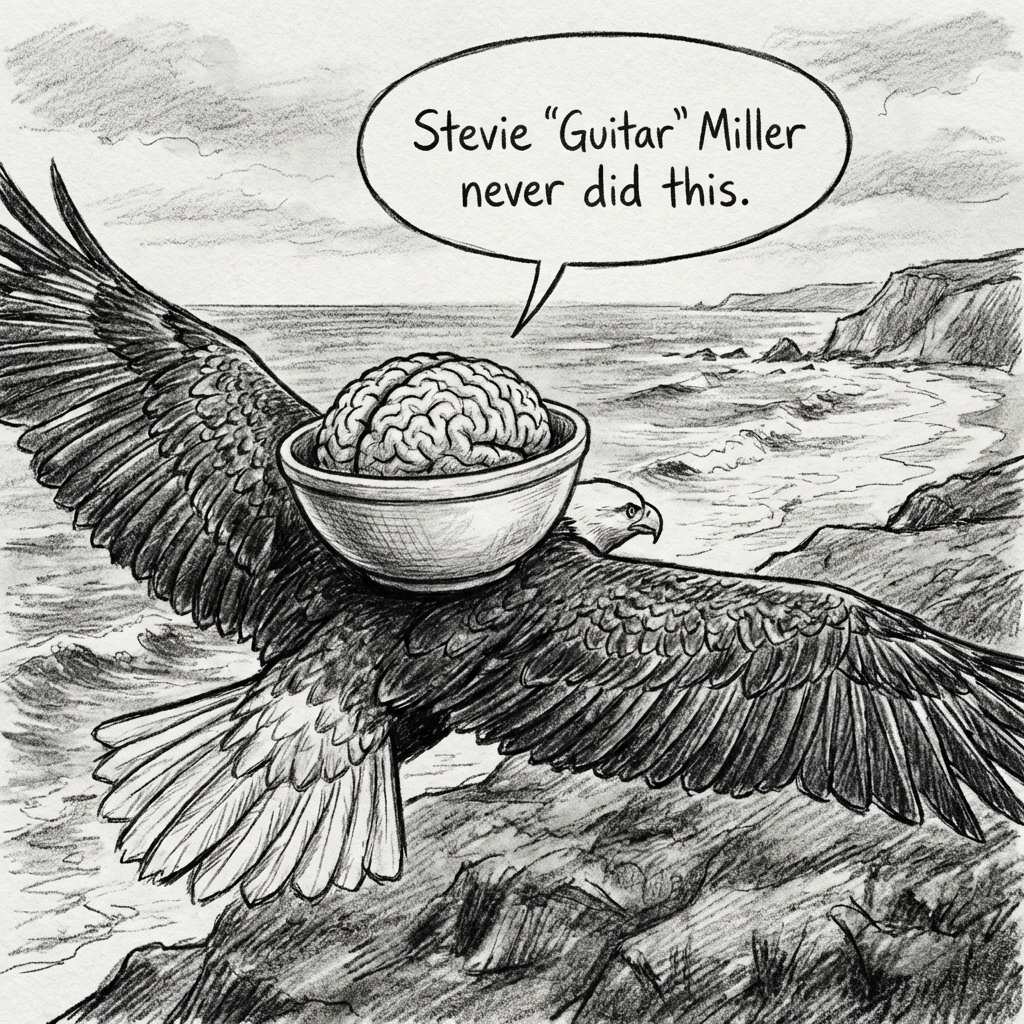
Humans After AI
by Buck Roy and Nano Banana
PARTING THOUGHTS
We need, in love, to practice only this: letting each other go. For holding on comes easily; we do not need to learn it.
–Rainer Maria Rilke
IN CASE YOU MISSED IT
Headhunter’s Secrets: Why AI Can’t Replace Humans
April 8, 2026
The New Oil Crisis
April 3, 2026
The War Economy and Iran
March 27, 2026
Just a sample text from heading element.