Why Economic Growth Matters
January 23, 2026
Doug Leyendecker

Welcome to This Week’s Leyendecker View
I think that AI will probably, most likely, sort of lead to the end of the world. But in the meantime, there will be great companies created with serious machine learning.
– OpenAI’s CEO, Sam Altman
Do you trust this guy?
FAVORITE READS OF THE WEEK
The new Romanticism
Can we recapture our souls?
Thomas Sowell says AI lies big time
Sowell may be our greatest economist.
THINKING OUT LOUD
Why Economic Growth Matters
It solves a great many problems
Fortune magazine says that our spiraling-out-of-control government debt is killing the American dream. Peruse the news and you’ll find many articles about stagnating wages, the wealth and income gap, job losses due to tech and AI, our ever-expanding social safety net costs, the unaffordability of our homes, and the obvious huge tearing of our social fabric. Why do we seem to be in a negative spiral?
It’s because we lack meaningful economic growth.
For much of the post–World War II era, the US enjoyed strong, broad-based economic growth. Productivity gains flowed through to rising wages, expanding opportunity and improving living standards across income levels. Americans largely believed that effort would be rewarded and that their children would live better lives than they did. That belief, more than any statistic, anchored social stability and civic trust. And it engendered patriotism. Americans loved being American.
Between 1945 and 1990, average annual GDP growth was around 3.2%. Since 2000, our GDP growth has averaged 2.1% per year, prompting many economists and politicians to believe this was our new and permanent normal. Naturally, protracted anemic growth tilted policy toward redistribution. Recent data suggests that over 50% of Americans rely on government support, either through social safety net programs or wages earned in government agencies of heavily government-subsidized industries like defense, health care, and education. Our economy is still the largest in the world, yet it lacks dynamism. So today, Americans are not so happy being American.
One of the most visible consequences of our economic slowdown is the nation’s $38 trillion, and counting, debt. Personal debt is manageable when we keep earning more as individuals. If our earnings fall, debt becomes dangerous, potentially catastrophic. The country is no different.
In our low-growth environment, government revenues have failed to keep pace with our obligations, leading policymakers to rely on fiscal and monetary stimulus—not to invest in future productivity but to sustain our lifestyles and the consumption-based economy ours has become. Weak growth thus turns debt into a structural problem rather than a temporary tool.
Wage stagnation for many workers is another direct consequence of anemic growth. Sustainable wage increases come from productivity growth—workers producing more value per hour. US productivity growth has been stagnating for 20 years. When productivity growth slows, wages stagnate.
For millions of Americans, this has meant working harder simply to maintain their standard of living. The result has created psychological challenges: frustration, resentment, rising class tension, and declining trust in institutions that promised progress but delivered stasis.
The decades-long political push to increase the minimum wage is a direct result of low productivity and low economic growth. Do we have a minimum wage problem, or have we not been creating enough jobs that pay more than the minimum wage? Since our GDP began stagnating, policy has focused on protecting and growing entitlements rather than inspiring and empowering growth.
Economic growth matters because it addresses our economic pressures and social tensions simultaneously. A growing economy increases tax revenues without raising tax rates, making debt more manageable. It encourages private investment, which drives productivity and real wage gains. It also expands employment and opportunity, which reduces reliance on social safety net programs. Growth transforms welfare from a permanent fixture into a temporary support.
Aware of this, the Trump administration has pursued a deliberate shift in economic and trade policy aimed at strengthening domestic production and investment to restore growth. Central to this effort was tax reform. By lowering corporate tax rates and allowing for full expensing of capital investments, the administration seeks to reverse decades of incentives that pushed capital offshore. The goal is straightforward: Make the US the most attractive place in the world to build, invest, and hire.
Trade policy is another pillar of this growth strategy. For years, US trade policy prioritized low consumer prices over productive domestic capacity. The Trump administration has challenged this consensus by renegotiating trade agreements and imposing tariffs to counter unfair practices, particularly those that gutted American manufacturing. While tariffs are controversial, this approach is rooted in the belief that long-term growth requires a strong industrial base, resilient supply chains, and fair competition.
Deregulation further supports the growth agenda. By reducing regulatory burdens—especially in energy, manufacturing, and small business formation—the administration aims to lower the cost of expansion and innovation. Cheaper energy, faster permitting, and clearer rules are intended to encourage domestic investment and job creation. These policies were designed not as short-term stimulus but as structural reforms intended to revive productivity growth.
The broader logic behind these policies is often misunderstood. Growth is not about maximizing consumption or inflating asset prices, both of which have been supported by decades of endless fiscal and monetary stimulus. Growth is about expanding the nation’s productive capacity—that is, its ability to create real value. When an economy grows through investment, innovation, and goods production, wages rise naturally, living becomes more affordable, debt becomes more manageable, and social programs become less strained.
Just as importantly, growth shapes how people feel. When opportunity is expanding, societies are calmer and more cohesive. People are more willing to take risks, start families, and invest in their communities. They are less likely to resent those who appear more successful. Who needs to blame others for something when focused on what to do with their extra money?
Growth fosters a sense of safety and possibility not because problems disappear, but because opportunity and progress feel within reach. In contrast, stagnation breeds zero-sum thinking, where every gain feels like someone else’s loss, and politics becomes a struggle over scarcity that risks breeding extremism, like the recent election of a socialist mayor in New York City.
History suggests that America thrives when policy supports production rather than consumption and redistribution. Without economic growth, how else can our country resolve our many challenges?
THE RANDOMS
By suing JPMorgan, is Trump trying to egg on Jamie Dimon to run for president?
The push for everyone to get a college degree couldn’t have happened at a worse time. Now AI is making more and more college-degreed jobs irrelevant. And now we need even more blue-collar workers. It’s time to get shop class back in the high school curriculum.
Nvidia is set to enter the self-driving car market. Now why would they do this? Do they see an end to their chip dominance coming?
Because you never know what he is going to say or do, and because he pushes defiantly back on outdated and self-defeating politics and bureaucracies in the US and Europe, Trump is the perfect bad guy to fuel the media’s endless soap opera narratives. The media should pay Trump a royalty since his style and behavior help them whip up and grab audiences, making them all that much more money.
How much of the chaos around ICE and ICE resistance is a direct result of the media’s concerted and coordinated effort to turn ICE into a soap opera villain?
Minneapolis looks like it wants to be the new Portland, which became the new San Francisco, which is now trying to return common sense to their government and community. As I wrote in last week’s essay, humans are by nature herd animals. And as I wrote over a decade ago, humans seem better at being lemmings than actual lemmings.
The three things we do with our time are productive activity, leisure, and life maintenance. What percentage of your time is spent on each?
ECONOMIC NEWS
Economy
Productivity is boosting capital, not workers
Inflation ticks up
Consumption grows faster than incomes
“No buy January” is trending
2025 inflation numbers: gasoline down, food up
Vegas tourism crashes
Labor
Do AI hiring screening tools need regulating?
We need more blue-collar workers
Top MBA grads struggling to find jobs
BUSINESS
Finance
Investors cashing out of private credit
PE is all in on continuation funds
Hedge fund makes $19B profit
VC fundraising down 35%
Real Estate
Trillions in real estate about to be inherited
Pending home sales collapse
It’s all about data centers these days
Tech
US TikTok finally done
Amazon opens brick-and-mortar megastore
Who knew we had a RAM shortage?
The start-up making human embryos
AI
A guide to the AI circular deals
50%+ of companies are getting nothing from AI
Maybe AI’s influence on jobs is only starting
The 40 jobs most exposed to AI
Claude is blowing people away
Energy
Fracking is about to go global
We’d have no world without hydrocarbons
Wyoming could be a natgas giant
THE NATION
Politics
2025 net migration went negative
CA cancels its war on US truckers
Trump protects CA from raw sewage
Policy
Garnishing student loan wages gets postponed
Tapping 401(k)s for home down payment
Immigrant fraud could be huge
Trade
China and Canada work a trade deal
Culture
Our murder rate is plummeting
The history behind every state’s name
The wedding industrial complex is shrinking
Saks’ bankruptcy says luxury is over
More older folks are rooming together
GEOPOLITICS
Global
Is Trump making the UN irrelevant?
US blocks China and Cuba from Venezuela’s oil
The world has too much wine
World’s first treaty to protect high seas
Bubbles are everywhere in the world
Europe
Europe stumbles again with South American trade deal
Just how irrelevant is Europe?
Europe has no Ukraine coordinator
France pretends it cares about Greenland
Ukraine
Zelensky blasts Europe’s ineptitude
Putin sees no breakthrough on Ukraine talks
They want more Ukraine territory
Putin offers frozen assets to Ukraine and Gaza
Russia unleashes winter energy terror
Middle East
Netanyahu joins Trump’s Board of Peace
Gaza Board of Peace takes shape
Trump wants $1B for countries to be on Peace Board
Syria struggles to create order
China
China’s birthrate plunges even more
Why Chinese women are having fewer babies
While their economy keeps growing
China flies drone into Taiwan airspace
War Creep
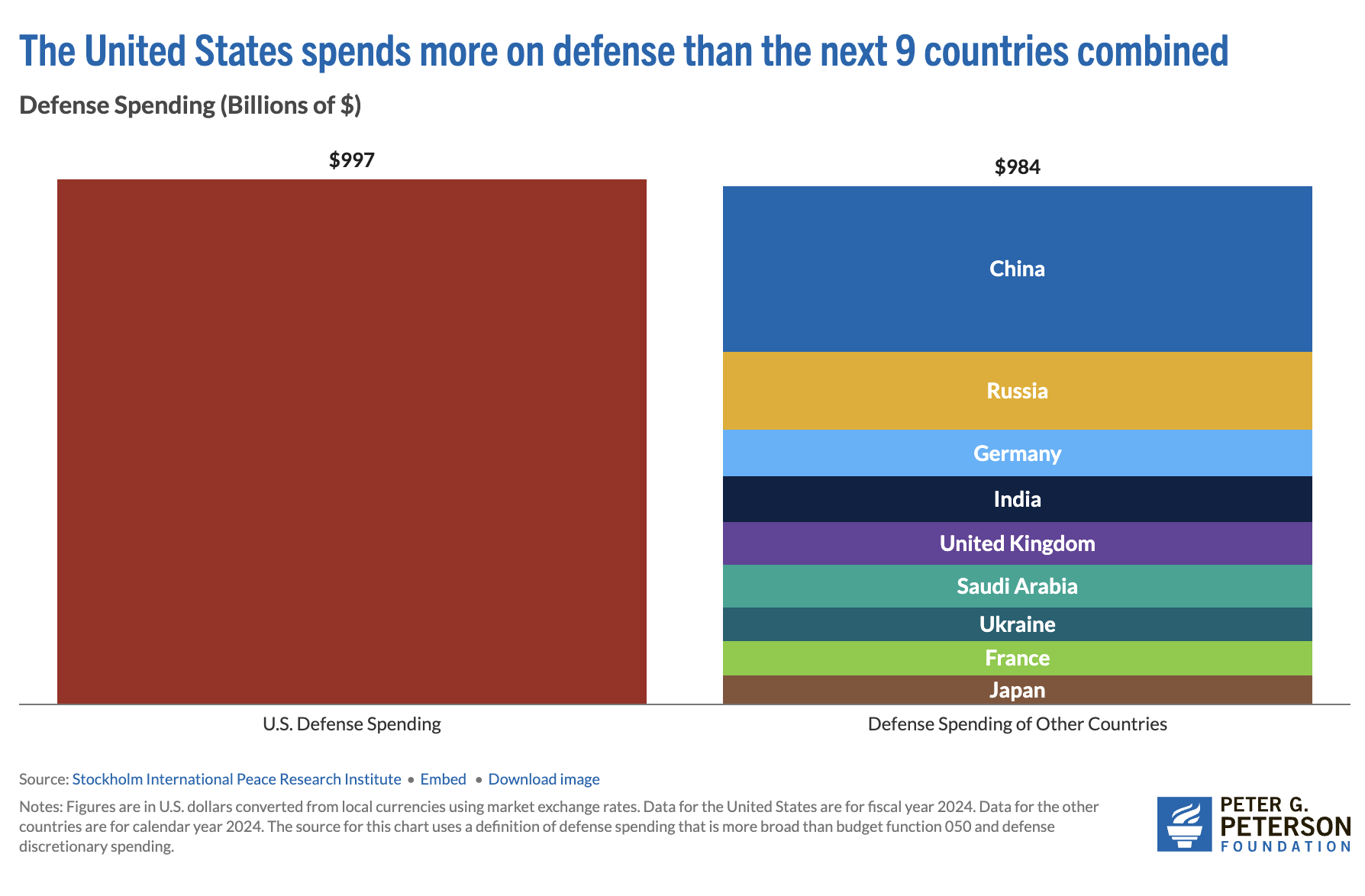
US defense spending vs. other countries
Pentagon ready to integrate AI
The future of war is cheap
MAKING A BETTER YOU
Health
The newest health trend, tracking your pee
A necklace blood glucose monitor is here
Weight loss drugs are good for restaurants
Mind
Perception is inference, not reality
Rekindling the joy of slumber
How to arrange your desk
Body
Feed a cold, starve a fever?
Trying to improve your health? Keep it simple
The Kaizen approach to self-improvement
FUN STUFF
The Extraordinary
Time-lapse video of Paris’s growth from day one
Florida gets snow for second year in a row
10 spectacular treehouses
Music That Found Us
An hour with Pat Metheny
2hollis’s “Flash.”
Classical music is just heavy metal before electricity
Worth a Watch
28 Years Later: The Bone Temple, better than the original.
Get your GOM fix with A Knight of the Seven Kingdoms.
The sweet Rebuilding.
The Yum Yums
It’s mac and cheese season!
Creamy baked mac and cheese
Mac and cheese with peas
Stovetop mac and cheese
Pimento mac and cheese
French onion mac and cheese
Old Bay crab mac and cheese
Extra creamy lobster mac and cheese
Home-made hamburger helper
Trinidad macaroni pie
PARTING THOUGHTS
The quality, not the longevity, of one’s life is what’s important.
–Martin Luther King, Jr.
IN CASE YOU MISSED IT
Why Bubbles and Busts Happen
January 16, 2026
Headhunter’s Secrets: The Cost of a Hiring Mistake
January 14, 2026
The Transition Economy
January 9, 2026
Just a sample text from heading element.