The War Economy and Iran
March 27, 2026
Doug Leyendecker

Welcome to This Week’s Leyendecker View
It is the mark of an educated man to be able to entertain a thought without accepting it.
–Aristotle
FAVORITE READS OF THE WEEK
6G is coming. What to expect
Get ready for a big upgrade.
What holds America together
Our middle—literally.
THINKING OUT LOUD
The War Economy and Iran
From war economy to market economy?
Free societies and free markets are, in relative terms, new inventions. Before their creation, peoples, lands, and, eventually, budding nation-states were largely authoritarian and monarchical. Rulers oversaw lands of varying and unevenly endowed resources. Some lands offered fertile soil, others abundant minerals, and others commanded strategic routes of transport and exchange.
As trade networks branched out across continents—not just spreading goods but also revealing who had what natural resource or more advanced technologies—these differences between regions became apparent and widely understood. And this understanding unleashed a potent mix of human emotions like ambition, greed, and envy. The natural human temptation to expand and overpower fueled the motivation to conquer those with resources rulers wanted. Trade, then, inevitably gave way to centuries of war and war-based economies.
War was never simple. It was an immense economic undertaking. Armies had to be assembled, trained, equipped, fed, sheltered, and sustained. Weapons demanded raw materials—wood, stone, iron, bronze, later steel—and the skilled labor to shape them. Transportation systems had to be built and maintained.
Fortifications required designers, builders, and many raw materials. Castles were designed to withstand attack even as new weapons emerged to breach them. At sea, warfare depended on entire fleets, along with shipyards, timber, iron, rope, sails, and experienced sailors. Energy—first charcoal, then coal, and later oil—powered both production and movement.
For centuries, the “war economy” may have been the dominant form of economic organization.
War also accelerated innovation. Competition between rival states drove advances in weapons, defenses, logistics, and production, with many breakthroughs later shaping civilian life. Metallurgy strengthened armor and weaponry. Engineering evolved through fortification and the infrastructures developed to execute campaigns. Naval warfare advanced shipbuilding and navigation, laying groundwork for global trade.
In modern eras, wartime research produced radar, jet engines, nuclear power, computing, and ultimately the internet. Mass production scaled rapidly under wartime pressure, and medicine advanced as battlefield demands accelerated antibiotics and trauma care.
In this sense, centuries of organized conflict may have helped lay the foundation for the modern market economy and the capacity to innovate. Systems originally designed to support conquest and defense evolved into civilian infrastructure and industries.
The modern market economy would go on to help push out the prevalence of the war economy. The former’s rise created more wealth and distributed it more broadly, which promoted stability in nations. It also helped wrest resources from the hands of rulers and spread it across societies, reducing both the people’s reliance on government and the power of authoritarian regimes. Just as the war economy goes hand-in-hand with authoritarianism, free market economies go hand-in-hand with free countries.
By the time WWII exploded, the world knew the power of war to impel innovation and grow wealth. But what it didn’t yet know, and what the collision of the old war economy and the new market economy during WWII revealed, was war as economic leverage. We learned how it could coerce authoritarian governments into dropping their war economies once and for all and adopting free markets for free people.
World War II helped pull the US economy out from the Great Depression. Once WWII was over, we had an improved production infrastructure and legions of new innovations. And, having benefited from an economic turnaround, America had more jobs, better paying jobs, and more discretionary income for new-fangled technologies. A virtuous economic cycle ensued for several decades.
Post WWII, the US was able to leverage its wealth overseas. Instead of leaving Germany and Japan ravaged and again susceptible to authoritarianism, we lent them money to rebuild. And we helped them rebuild their economic infrastructures around free markets, not war, insulating them from oppressive tyrants and instead promoting freedom and self-rule.
War is hell. Thousands, or far more, can die. But, in many cases, war is necessary to stop totalitarian regimes who’ve already senselessly murdered people from senselessly murdering even more. Just consider the Holocaust. The uncomfortable truth is that in our free-market era war can force the transition of an economy from war based to market based. One need look no further than post-WWII Germany and Japan to see the merits of certain wars.
The Iran War will surely spur some economic activity and innovation at home. But perhaps Trump’s real goal is using war to give the Iranian people an opportunity to rebuild their economy around free markets, grow wealth more broadly, and resist the yoke of the tyrannical, murderous mullahocracy under which they’ve lived for almost 50 years.
It’s been done before, and the world has been safer and more prosperous for it.
THE RANDOMS
It is an uncomfortable truth that the United States is the world’s policeman. But if not us, then who and why?
There’s no turning back on the Iran war, which means the sooner allies show alignment and a serious commitment to defeating Iran, the sooner the war could be over.
Do we really still need TSA agents and their arcane system anymore?
Russia keeps pounding Ukraine, yet it has become obvious that Ukraine is not going to surrender itself into the arms of Putin. When will Russians tire of this dictator who is of much smaller stature and capability than he himself sees in the mirror?
Which companies and industries today are the candle and buggy whip makers of yesteryear?
Four tickets, parking, two beers, two sodas, four hot dogs: $413.16 for a family outing at Dodger Stadium.
Empires have been battling over the Strait of Hormuz for centuries. Is it time to let a coalition of countries manage it?
The big Hollywood studio industry gets bigger via consolidation. Will the legacy studio industry and Netflix dominate the future of film, or is a new group of creative folks on YouTube about to hit them below the belt?
My mother is a healthy 91 years old. She has never gone to a gym in her life. She never lifted weights, jogged, or rode bikes for exercise. She never did yoga. But she did like to dance.
ECONOMIC NEWS
Economy
US jobless claims rise slightly
The US is seriously broke
How AI could worsen inequality
Higher diesel prices, higher inflation
Black women, the fastest growing entrepreneur class
Labor
Corporate BSers are poor performers
How young workers are AI-proofing themselves
How to build team spirit
The Lone Star
Big growth coming to Galveston
Musk announces mega fab for Austin area
Samsung may build another giant Texas chip plant
BUSINESS
Finance
Apollo caps private credit withdrawals
Lenders now have the upper hand
Fed to water down bank capital requirements
Loan-to-own is growing
Real Estate
Mortgage rates are rising
The housing bargain in plain sight
Apartment rent activity across the country
Public Storage makes $10B+ acquisition
Tech
The SpaceX IPO is almost here
Social media gets slapped on the wrist
Google Maps gets “smarter”
A new mini magnet acts like a giant
AI
Google has AI memory breakthrough
OpenAI begins to narrow its focus
A good AI entertainment boom
AI is leading to “brain fry”
Energy
Chevron may close their CA refineries
NY State faces soaring electric bills
NY governor backtracks on climate law
Global car makers retreat from EV plans
THE NATION
Politics
Who is front-running Trump’s policies?
SCOTUS may tighten immigration rules
Trump courts Belarus president
Why voter ID is so hard to pass
Policy
A way to fix air travel
Homeland Security deal passes Senate
The White House AI policy blueprint
Trump goes after cybercrime gangs
Culture
Some big cities are losing population
The rise of the news avoider
Readers prefer to read AI writing
GEOPOLITICS
Global
Energy shock and the global debt challenge
Australia’s right wing is gaining momentum
Is Venezuela doing what Trump wants?
Brazil makes its own fighter jet
Europe
Germany ready to go toe to toe with US
Europe in range of Iran’s missiles
Eurozone consumer confidence plunges
Germany’s working class turns right
Far right gaining ground in France
Spain’s young men turn right, too
Ukraine
Key Russian ports are on fire
Putin asks oligarchs for money for war
Ukraine is running out of money, too
Zelensky targets Saudi Arabia for fundraise
Middle East
Iran wants to charge fees at Strait of Hormuz
Israel kills Iranian Hormuz commander
The Saudis want the US to win
Pakistan, the Iran-US go-between
Europe’s quiet help with Iran war
Will Gulf States join US effort?
China
China can force people to turn over passwords
China pitches itself as “harbor of stability”
China approves brain chip to treat paralysis
War Creep
Russia may be sending drones to Iran
VW to start making missiles
The first AI war
MAKING A BETTER YOU
Mind
Social ties help you live longer
Pot contributing to mental health problems
Full-fat cheese linked to lower dementia risk
Body
The best sports for longevity
Isometric exercise, the best workout?
Is matcha the better caffeine?
FUN STUFF
The Extraordinary
A Death Valley superbloom of flowers
NASA plans a $20B moon base
What ancient earth looked like
Music That Found Us
“Wild Is the Wind,” Nina Simone.
“The Ghetto,” Donny Hathaway.
“War,” Edwin Starr.
Worth a Watch
Wolfgang Puck cooks for the Oscars
Guy Ritchie fun, In the Grey.
Luke Hemsworth’s Beast.
The Yum Yums
Classic American breakfast
Classic British breakfast
Classic German breakfast
Classic French breakfast
Classic Japanese breakfast
Classic Chinese breakfast
Classic Persian breakfast
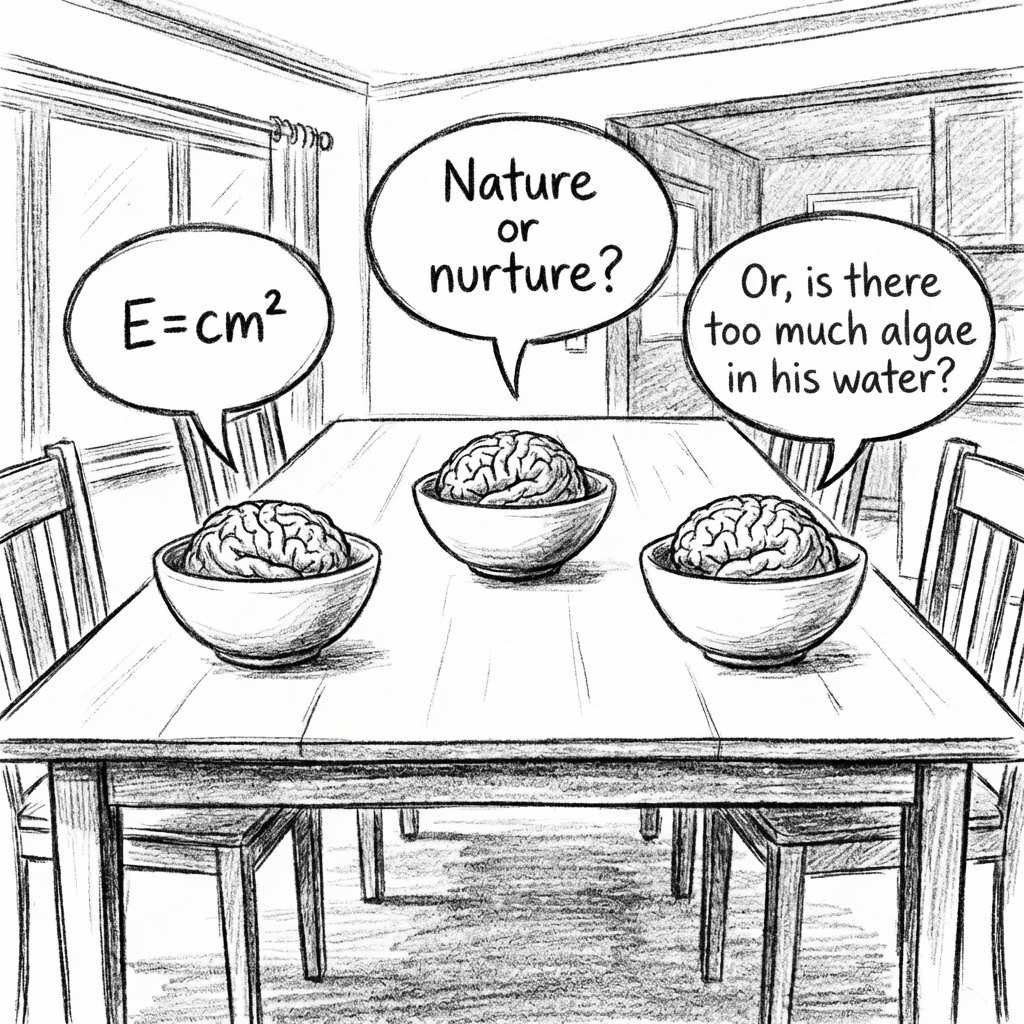
Humans After AI
by Buck Roy and Nano Banana
PARTING THOUGHTS
The reasonable man adapts himself to the world; the unreasonable one persists in trying to adapt the world to himself. Therefore, all progress depends on the unreasonable man.
–George Bernand Shaw
IN CASE YOU MISSED IT
The Affordability Challenge
March 20, 206
The Everything Crisis
March 13, 2026
The Big Government Cycle
March 6, 2026
Just a sample text from heading element.